Predatory loan app scams: when an instant loan app takes your contacts and then harasses them
A quick loan that wants everything
When money is tight, an app promising a fast, fully digital loan can look like a lifeline. Security firm Lookout found that many such apps are predatory. In a report covered by Help Net Security on December 1, 2022, Lookout described nearly 300 Android and iOS loan apps, 251 of them on Google Play with over 15 million combined downloads, aimed at users in countries including Colombia, India, Indonesia, Kenya, Mexico, Nigeria, the Philippines, Thailand and Uganda. Apple and Google have since removed those apps.
The apps advertised quick approvals and reasonable terms. Behind the listing, victims often faced hidden fees, high interest and repayment terms worse than the ones advertised.
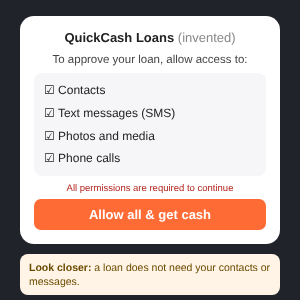 Invented example, for illustration: a loan app that insists on contacts, messages and photos.
The data grab
To apply, users handed over personal and financial details such as name, address, employment and banking information, then completed ID verification with a video selfie and an image of an ID card. The apps also asked for access to contacts, photos and media, phone calls and text messages. Refusing those permissions blocked the user from continuing, and, as BleepingComputer reported, data was uploaded to the operators' servers as soon as permissions were granted.
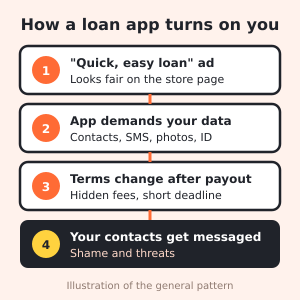 The usual sequence, from the easy loan ad to messages sent to your contacts.
When the terms change
According to BleepingComputer, some borrowers received only part of the loan, after which interest rates changed or hidden fees appeared, sometimes up to one-third of the amount borrowed. In some cases a promised 180-day repayment period shrank to eight days, with steep penalties for late payment. Apple and Google require a minimum 60-day repayment period and a maximum 36% APR, but the apps claimed compliance while breaking those terms.
Shame as a collection tool
When borrowers could not pay, collectors sometimes contacted people from the borrower's contact list, including people never named in the application, and disclosed the debt to family and friends. Lookout and BleepingComputer both describe threats to expose the debt, and BleepingComputer adds that some lenders sent edited images taken from victims' devices to their contacts. Sources warn that operators could return with similar apps under different names.
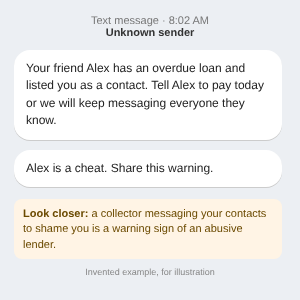 Invented example, for illustration: a collector messaging a contact to shame the borrower.
How to protect yourself
Read user reviews and research the lender's reputation before using a loan app, as BleepingComputer advises. Pay close attention to the permissions an app asks for. A lender does not need to read your contacts, your text messages or your photo library to approve a loan, so a requirement to grant them is a reason to stop. Read the full terms, including fees, interest and the repayment deadline, before you accept any money, and check that the lender is a registered, licensed business in your country.
Lookout notes that desperate borrowers may skip reviews or accept broad permission requests, and that is exactly what these apps count on. If you need short-term help, compare options such as a bank or credit union, a nonprofit credit counselor, or help from family before you turn to an unknown app.
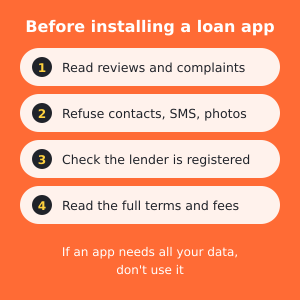 A quick checklist before installing a loan app.
- Uninstall the app and revoke its permissions in your phone settings. Change passwords and any security codes that may have been exposed.
- Do not pay extra "fees" to stop threats. Keep screenshots of messages, calls, the app's name and your payments.
- Warn the people on your contact list that unusual messages may come and that they should not reply or pay.
- Report the app to the app store and the abuse to your national consumer or financial regulator and the police or cybercrime authority.