Fake parking ticket scams: why a small fine with a QR code or text link is a trap
A ticket you may not have earned
You come back to your car and find a slip under the wiper, or you get a text saying you owe a parking fine. The amount is small, the message is urgent, and paying seems easier than arguing. That is the whole trick. Fake parking tickets are designed to be paid quickly and without a second thought.
There are two main versions. In the first, scammers leave receipts that look like official parking tickets on windshields, often with a QR code that leads to a fake payment site. In the second, a text warns that you have an unpaid ticket, quotes a small fee and threatens larger fines if you wait. The link takes you to an unofficial website where money or personal information is stolen.
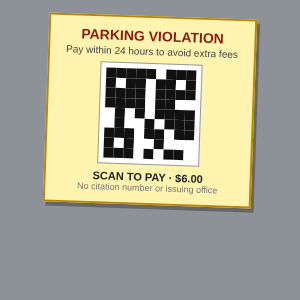 Invented example, for illustration: a slip with a code, but no citation number or issuing office.
Why the QR code is the warning sign
Security firm Bitdefender describes scammers using portable printers to make counterfeit tickets, and also placing stickers over real QR codes on parking meters or signs so that the fake is hard to spot. A CyberGuy report on Fox News notes that most cities do not use QR codes in their ticketing systems at all.
The Better Business Bureau's trade association said the tickets are easy to make, and that a QR code makes paying on the spot feel convenient. Police in Santa Cruz arrested a 19-year-old accused of placing fraudulent citations with QR codes on windshields, and police in Scottsdale, Arizona reported drivers getting fake tickets.
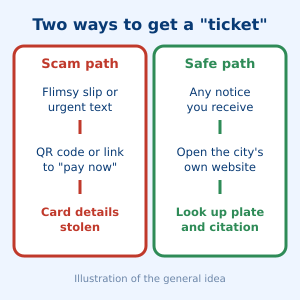 The scam path pushes you to pay now; the safe path starts on the official website.
The text message version
The texting version is a form of smishing. Bitdefender points out that parking tickets cannot be paid by text message, and that legitimate authorities will not request payment that way. Messages may carry a city or parking authority logo and look professional, but the link leads to a counterfeit payment page.
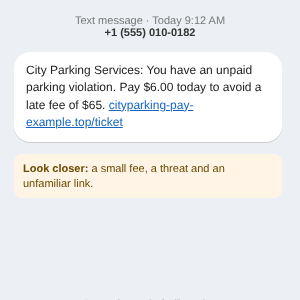 Invented example, for illustration: a small fee, a threat of a late fee and an unfamiliar link.
What to do instead
Do not pay right away. Open the official parking authority's website yourself, on a computer if possible, and look up the ticket with your citation number and license plate. If it does not show up, it is likely fake. Find the authority's contact details through your own search, not from the slip or message. Real tickets usually come double-sided or in an envelope with instructions for paying or contesting.
There is one caution. The BBB notes that many legitimate operators also accept PayPal or Venmo, so a payment method alone does not prove a scam. Parking apps deserve the same care: download only the official one from an app store or the authority's site, since fake apps imitate real ones. Paying by credit card also makes fraudulent charges easier to dispute.
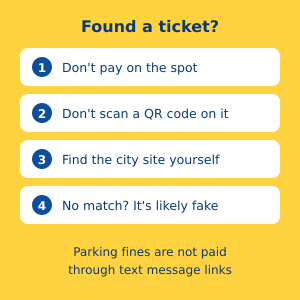 A quick checklist for a ticket you did not expect.
- Contact your bank or credit card company to report the fraud and ask for the card to be replaced.
- Change any password you entered, and watch your statements and credit reports.
- Report it to your local police and file a complaint with the FTC.
- You can also report it to the BBB ScamTracker.