Vacation Rental Scams: How Fake Listings and "Book Direct" Offers Leave You With No Place to Stay
 The photos are real. The house may not be available at all.
A Dream House at a Bargain Price
AARP explains that scammers advertise houses, condos or cottages at unusually low rates. They may hijack a real listing and swap in their own contact details, or invent one using stolen photos. The FTC describes scammers copying the look of real hotels and posting attractive photos on property-sharing sites, then asking for a deposit or full payment by wire transfer. When victims arrive, the property does not exist or was never available: a "vacation to nowhere".
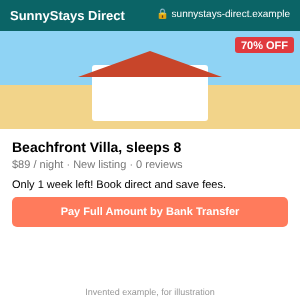 Invented example, for illustration: a deep discount, no reviews and a bank transfer button.
The "Book Direct" Switch
The BBB describes a common route: after first contact on a platform such as Airbnb or Vrbo, the "owner" asks you to book on their own website. The site looks legitimate, you pay a deposit or the full amount, and then either the website and phone number vanish or you get a last-minute cancellation with no refund. The BBB reports one family lost more than $9,000 after booking off-platform, and its advice is firm: never agree to move a conversation or payment off the platform. Staying on it keeps messages and payments on record if something goes wrong.
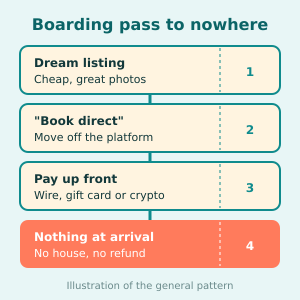 How a listing turns into a lost deposit.
Other Travel Traps
AARP also lists fake car rental sites that demand payment in advance by gift card or prepaid debit card, discounted cruise or resort packages where extra fees erase the savings, "free" trips that require a credit card number, advance fee or timeshare presentation, and shady travel clubs with high dues. A request to wire a deposit or full payment is what the FTC calls the "surest sign" of a scam.
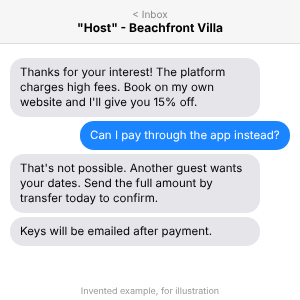 Invented example, for illustration: leave the platform, pay now, keys later.
Checks Before You Book
Search the owner and the address online and look for reviews or complaints; the FTC notes that finding the same ad under a different name or contact information is a red flag. Compare the property with photos using Street View, and run a reverse image search to see whether pictures were taken from another listing. Call the owner and ask detailed questions, get a written rental agreement and read the cancellation and refund terms. A new listing with no review history deserves extra caution. Paying by credit card offers the most protection; wire transfers, prepaid cards and gift cards offer almost none.
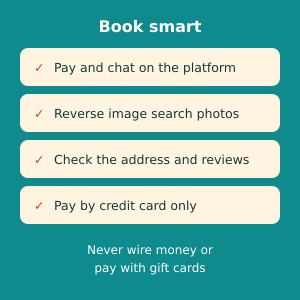 Four habits for booking safely.
- If you paid by credit card, contact the card company as soon as possible to dispute the charge.
- Tell the website where you found the listing so the post can be taken down.
- Report it to the FTC at ReportFraud.ftc.gov or 877-382-4357, and to BBB Scam Tracker.
- Expect that you may not get your money back, but reporting can protect other travellers.