Home Title Fraud Scams: How Criminals Forge a Deed and Sell a House They Do Not Own
 A forged page of paper can move a whole house.
Selling a House It Never Owned
Home title fraud, sometimes called deed fraud or title theft, happens when someone takes over the title to a property by impersonating its owner. According to the FBI's Boston office, fraudsters forge documents to record a phony transfer of ownership, then sell the home, take out a mortgage on it, or rent it out, forcing the real owner to go to court to reclaim it. The schemes often rely on identity theft, with personal details gathered online or from public records.
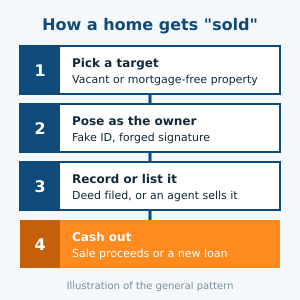 The usual path of a title theft.
Who Gets Targeted
The FBI says criminals look for owners of vacant land or properties with no mortgage or lien, found through public records. They impersonate the owner and have a real estate agent list the property, and owners often learn about it only after the sale closes. AARP adds that second homes and high-equity properties are attractive, because fraud there is less likely to be noticed quickly, and that criminals may use data from breaches and even AI to make convincing fake IDs. Older people are also at risk from pressure by relatives or close associates to transfer property into another name.
What the Numbers Show
From 2019 to 2023, 58,141 victims reported $1.3 billion in real estate fraud losses to the FBI's Internet Crime Complaint Center. The IC3 does not track quitclaim deed fraud separately, and the FBI believes actual losses are higher, since many victims feel embarrassed or do not know where to report. In its 2025 survey of 245 title insurance professionals, the American Land Title Association found that nearly half had seen at least one fraud attempt, up from 28% the year before, as AARP reports.
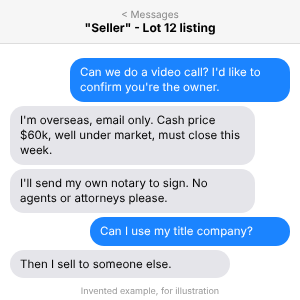 Invented example, for illustration: no video, no agents, a rushed cash sale.
Red Flags for Buyers and Owners
Buyers should watch for prices well below market, rushed closings, and sellers who avoid agents, attorneys or title companies. AARP also points to sellers who refuse video calls, insist on their own notary, communicate only by email, or sign remotely from an unverified location. For owners, BBB lists warning signs such as foreclosure letters for payments you never missed, bills that suddenly stop arriving because your mailing address was changed, and deeds recorded against your property that you did not sign.
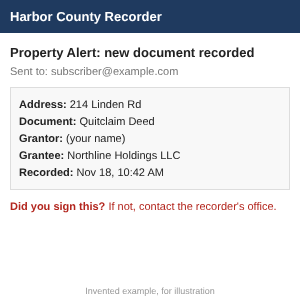 Invented example, for illustration: a recording alert can catch a forged deed early.
Steps That Make It Harder
Ask your county recorder whether it offers document-recording notifications, and check deed records periodically. AARP suggests treating a missed property tax bill as a possible warning, inspecting vacant or rental properties regularly, and asking a real estate attorney about state tools that add a review before a transfer. Buyers should buy title insurance with fraud coverage, including for cash purchases. AARP also cautions against "title lock insurance", which the FTC says does not protect against unauthorized transfers.
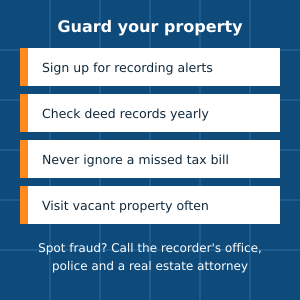 Four habits that make title theft harder.
- Report to your county recorder's office and local police, and keep all records.
- Report identity theft at IdentityTheft.gov and the crime at ic3.gov.
- Place a fraud alert or freeze with Experian, TransUnion and Equifax.
- Consult a real estate attorney; you may have to prove ownership and the fraud in court. If cost is a barrier, look for pro bono help through your bar association or LawHelp.org.