Unpaid Toll Text Scams: Why That "Final Notice" Message Is a Trap
A Tiny Bill You Don't Remember
Your phone buzzes with a message that looks official. It says you owe a few dollars in unpaid tolls, that a late fee is coming, and that you can settle everything in seconds by tapping a link. You might not even remember driving on a toll road. The amount is so small, and the message so brief, that paying it seems easier than investigating.
That reaction is exactly what the scammers are counting on. AARP reports that these texts typically demand around $11 to $13 and warn of a $50 late fee if you delay. The message appears to come from a toll agency or a transponder service such as E-ZPass or SunPass, but it comes from criminals who send it to huge numbers of phones at once.
 A small "toll balance" and a pay button: the bait.
Reading the Message Closely
The wording is remarkably consistent. The FBI's Internet Crime Complaint Center noted in April 2024 that the messages used almost identical language, including the phrase "outstanding toll amount", while the sender's phone number and the toll brand changed from state to state. A link in the text imitates the name of a local toll service and leads to a website the criminals control.
Some versions add pressure by threatening more serious consequences, such as losing your driving licence. Others, reported by New York's governor in February 2025, come from international numbers and ask you to reply "Y" so that the link becomes clickable. Neither request is something a genuine toll agency needs to do.
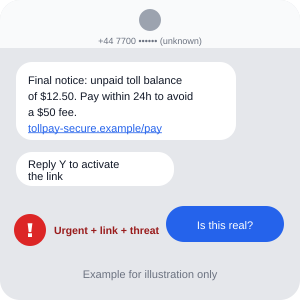 An illustrative example. Real messages vary by state and sender.
Why a Few Dollars Is the Perfect Price
Large demands make people suspicious; small ones make them hurry. A bill of about twelve dollars feels too minor to question, while the threat of a $50 penalty makes waiting seem expensive. Combine the two and you have a deadline that fits neatly into a busy day.
There is also a clever numbers game behind it. Scammers do not need every recipient to fall for the message. If a tiny fraction of the people who receive it happen to use toll roads, remember a recent trip and pay, the campaign makes money, and each payment hands over card details that can be used again.
A Scam That Travels From State to State
This is not a local nuisance. The FBI described a campaign that appeared to be spreading from one state to another, and a year later the US Federal Trade Commission was still warning that texts claiming you owe tolls are probably scams, even if you have never driven on a toll road. Agencies in New York, Massachusetts, Pennsylvania, Georgia and Texas have all issued their own alerts.
One useful clue is geography. Recipients in places with few or no toll roads have reported receiving the same message, which shows that the sender is working from a list of phone numbers rather than a record of anyone's driving.
The Page Built to Collect Your Card
If you tap the link, you land on a page designed to look like a payment portal. According to the FTC, it asks for bank or card details and may also request information such as a driver's licence number, which opens the door to identity theft. The FBI adds that the sites imitate real toll services, and other reports warn that links can lead to malware as well.
New York officials point out that E-ZPass and Tolls by Mail say they never ask for sensitive information such as card numbers, birthdates or Social Security numbers by text or email. Any message that does is, by definition, not from them.
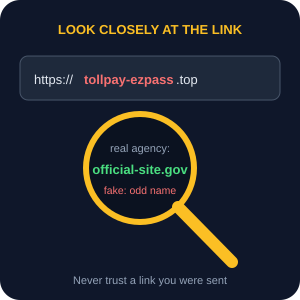 Check the address closely: odd names and endings are a warning sign.
Checking Without Clicking
You can settle any doubt without touching the link. Open your toll account the way you normally do, by typing the agency's website address yourself or using its official app, and see whether any balance is actually owed. If you want to talk to someone, use the customer service number printed on your transponder paperwork or on the official site.
A few agencies publish the numbers they genuinely use to send alerts. The Central Texas Regional Mobility Authority, for example, named the short codes its legitimate messages come from. If your agency does the same, compare the sender, but confirm the list on the agency's own website rather than trusting any list sent to you.
If You Have Already Tapped the Link
Do not panic, and do not reply. The FBI advises securing your personal and financial accounts and disputing any unfamiliar charges straight away, so call the bank or card issuer whose details you entered and ask them to block or replace the card. Change passwords if you typed any on the page, and keep an eye on your statements for the coming weeks.
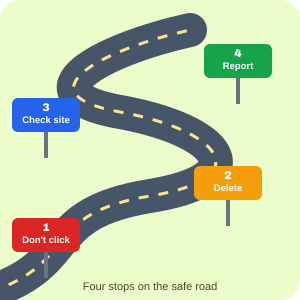 Four steps for anyone who receives the text.
For a message you have not acted on, delete it, block the sender and use your phone's option to report junk or spam. You can also file a complaint at ic3.gov, including the scammer's phone number and the website address in the text, which helps investigators track the campaign.