Solar panel scams: when a door-to-door pitch hides fees, a loan or a signature you did not expect
Sunshine, savings and a signature
Rooftop solar can be a sound purchase, which is exactly why it attracts bad actors. NPR's reporting describes high-pressure in-person sales, including door-to-door visits, sometimes by people claiming to be with the local utility, and manufactured urgency such as claims that a low interest rate must be locked in immediately.
The U.S. Department of Energy lists a few red flags. They include pressure to sign quickly, ads or offers with no clear business name, and online forms that ask for personal data to "see if you qualify". It also says plainly that the federal government has no program that installs solar panels on Americans' homes for free.
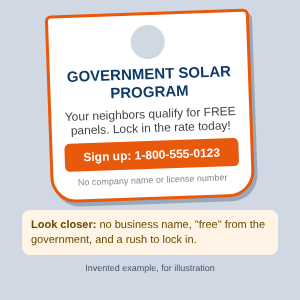 Invented example, for illustration: no business name, a "free" claim and a rush to lock in.
Where the money goes wrong
Many solar systems are financed, and that is where the Consumer Financial Protection Bureau (CFPB) warns of problems. In an August 7, 2024 advisory it described dealer fees added to a loan so that you borrow more than the system and installation cost, fees that are rarely disclosed and can make the interest rate look lower than it is. Some salespeople subtract a projected tax credit from the loan amount they show you, though the projection may be inaccurate and the credit may take time to arrive. Monthly payments may rise after 18 months unless you pay down the loan by the amount of the projected credit.
Promised savings may also fail to appear, and upkeep and repair costs can add to loan payments. NPR reported customers who expected far more in tax credits than they owed, and one family financed for nearly $134,000 for panels that were not producing power almost two years later.
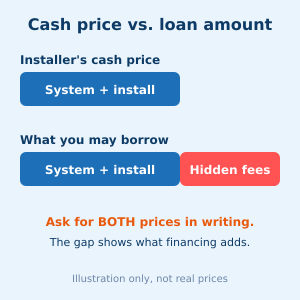 Illustration only: financing can add fees that the cash price does not include.
The signature trap
NPR described one customer who signed what she thought was a check of her roof but was actually a loan contract, with panels installed the next morning. That is why consumer advisers urge you to read contracts and proposals carefully before signing anything electronically, and never to decide during the sales visit.
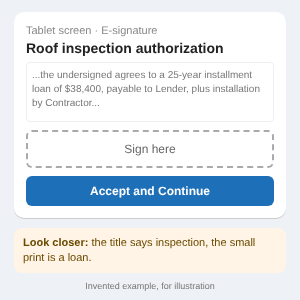 Invented example, for illustration: a signing page titled as an inspection but containing a loan.
How to protect yourself
The CFPB suggests looking first at free or subsidized energy efficiency programs, and getting an independent energy audit from someone with no ties to a lender or installer. Ask installers for the cash price, get a financing offer from a bank or credit union, and compare several installers and lenders. Request a written breakdown of work, materials and costs. NPR and the Department of Energy add that you should get at least three quotes after each installer has assessed your roof, check that the installer is licensed, read varied customer reviews, and ask neighbors who have installed solar.
Tax questions belong with a tax professional, not a salesperson. Tax credits and incentive rules change over time, so check the current details on official .gov websites before counting on any figure a salesperson quotes. A credit is not a rebate or a government check; it reduces income tax you owe.
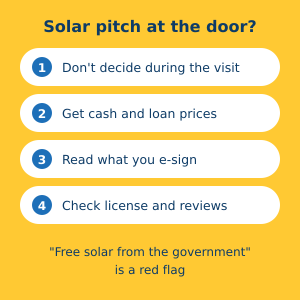 A quick checklist for a solar sales pitch.
- Some door-to-door sales carry a right to cancel under federal rules, so check your paperwork for cancellation notices and deadlines.
- Keep every document, e-signature email, quote and message, and ask for the full cash price and written cost breakdown.
- Submit a complaint to the CFPB (for a solar loan, choose the installment loan category) and report fraud to the FTC at ReportFraud.ftc.gov.
- Contact your state attorney general or consumer protection office, and consider speaking with an attorney.