Fake flight booking scams: why a bargain fare, a cancellation text or a refund call may leave you with no seat
The bargain fare that never takes off
Flight booking scams come in several forms, but the classic one is what Frommer's calls the "Fake Fare Flimflam", which the Better Business Bureau considers one of the most common air travel scams. Scammers set up fake booking sites, or near-copies of real ones, and advertise unusually cheap tickets. After you pay, you get a confirmation email but no actual tickets are attached.
Later, a caller may say you must verify personal or banking details, or pay an extra fee of around $200 to secure your seat, or that the fare has gone up. When you contact the airline, you learn there is no reservation, and the money is gone.
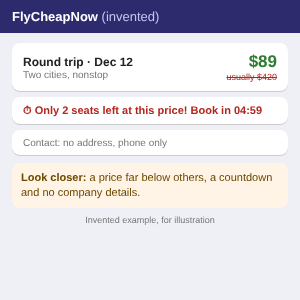 Invented example, for illustration: a price far below others, a countdown and no company details.
The "customer service" and cancellation tricks
AARP describes more ways scammers cash in on travelers. Fake customer service numbers appear in search results, and callers give up their card details. Phony cancellation texts or emails claim a flight is canceled and give a number to rebook, though the original flight was never canceled. Impostor social media accounts pose as airline support, answer complaints quickly, and ask for confirmation numbers, phone numbers or bank details.
A KPRC report on BBB complaints from July 2023 told of a viewer who called what she believed was her airline to get a refund on a $620 trip. She was told that paying $199 to "upgrade" the ticket would allow a refund. She paid, got no refund, and later calls went to someone who was not the airline. The BBB had received 183 reports of airline ticket booking issues so far that year, and noted that some victims reached fake agents through top Google results, which were often paid ads.
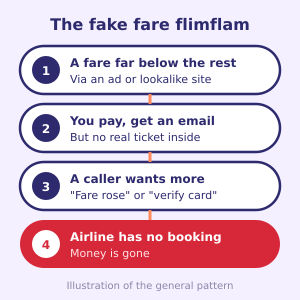 The usual sequence, from the bargain fare to the missing booking.
Red flags
Across the sources the same warning signs repeat. The price is far below other sites. The confirmation email has no ticket. An unsolicited caller asks for information or more money. The site has typos, blurry images, or no physical address or working phone number. The "agent" never says they work for the airline, pushes you to pay immediately or lose the fare, or a charge appears from a company you do not recognize. Social media "support" accounts with few followers or a recent creation date deserve extra suspicion.
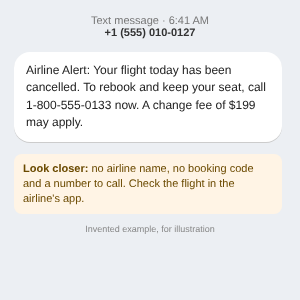 Invented example, for illustration: a cancellation alert with no airline name and a number to call.
How to protect yourself
Research any booking company by searching its name with words like "scam", "fraud" or "complaints", and check its reviews and BBB rating. Make sure the address starts with https:// and that you did not arrive through a sponsored lookalike link. Pay with a credit card, which allows disputes, and avoid debit cards, gift cards and wire transfers. Do not approve charges or give personal information over the phone, and keep records of everything.
For changes and refunds, use the airline's official app or website for its phone number, not a search result. AARP suggests confirming cancellations or delays on the departures board or with an agent at the ticket counter. The BBB also points travelers to the U.S. Department of Transportation's airline customer service dashboard to check airline policies.
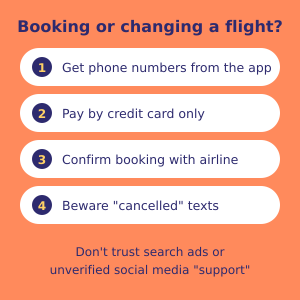 A quick checklist when booking or changing a flight.
- Contact your bank or credit card company first, and ask to stop the charge or dispute it.
- Then contact the airline using the details on its official website or app to check whether a booking exists.
- Keep the confirmation email, receipts, the number that called you and the website address.
- Report it to the FBI's Internet Crime Complaint Center at IC3.gov and to the BBB.