Military Leave Scam
How Fake Soldiers Use Leave Requests to Steal Money
Military personnel are often viewed as trustworthy, honorable, and courageous individuals. Unfortunately, scammers exploit this reputation by creating fake military profiles on dating websites, social media platforms, and messaging applications.
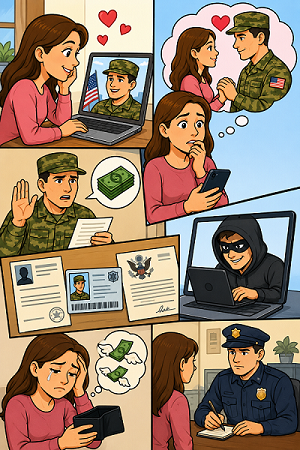
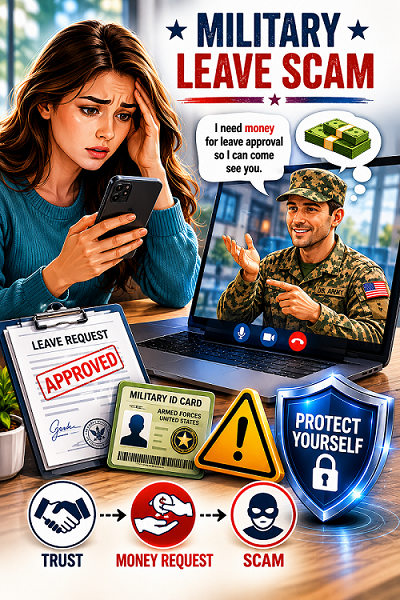
In a Military Leave Scam, the fraudster pretends to be a deployed soldier who has developed a romantic relationship with the victim. After building trust, the scammer claims they need financial assistance to obtain military leave approval before they can visit in person.
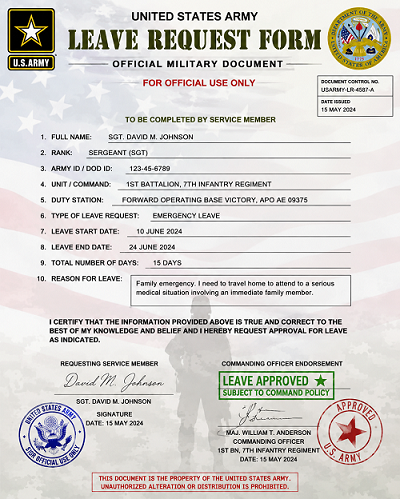
To support their story, scammers often provide forged military documents, fake leave request forms, military identification cards, and emails that appear to come from commanding officers.
How the Military Leave Scam Works
Most military leave scams begin with a fake soldier contacting a victim through a dating site or social network. Over time, the scammer develops a close relationship and gains the victim's trust.
Once an emotional connection has been established, the scammer claims they have been approved for leave and are planning to travel home or visit the victim.
Shortly afterward, a problem appears. The victim is told that military regulations require payment before leave can be processed or approved.
Common requests include:
- Leave processing fees
- Travel authorization charges
- Security clearance costs
- Insurance payments
- Military transportation expenses
- Administrative processing fees
- Emergency leave approval charges
The victim is then instructed to send money through wire transfers, bank transfers, gift cards, or other difficult-to-trace payment methods.
Why Victims Believe the Scam
Military scammers are often highly skilled manipulators. They spend considerable time building trust before ever requesting money.
The combination of emotional attachment, military credibility, and convincing documents can make the scam appear legitimate.
Many victims believe they are simply helping someone they care about overcome a temporary obstacle.
Warning Signs of a Military Leave Scam
- Someone claiming to be a soldier falls in love unusually quickly.
- You are asked to pay for military leave approval.
- The individual claims they cannot access their own money.
- You receive unofficial military paperwork through email.
- The scammer refuses live video verification.
- Payments are requested through gift cards or wire transfers.
- Additional fees appear after previous payments are made.
Fake Military Documents
To increase credibility, scammers frequently create forged documents that resemble official military paperwork.
These may include leave request forms, deployment orders, military identification cards, travel authorizations, and letters from alleged commanding officers.
Although these documents may look genuine, they are often copied, altered, or completely fabricated.
The Truth About Military Leave
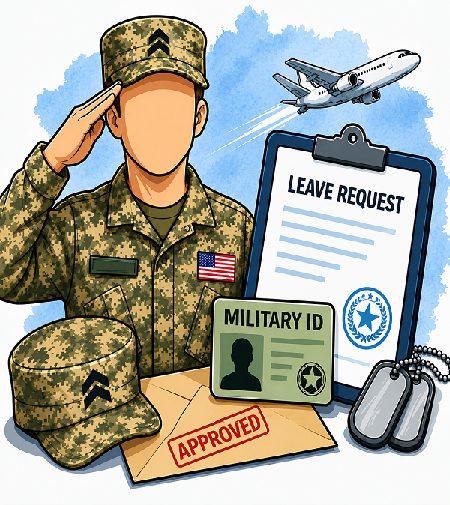
Legitimate military organizations do not require civilians to pay fees so a service member can obtain leave approval.
Military leave is processed internally through official channels and does not involve payments from online acquaintances, romantic partners, or members of the public.
How to Protect Yourself
- Never send money to someone you have only met online.
- Verify military claims independently.
- Perform reverse image searches on profile photos.
- Be cautious of rapid emotional relationships.
- Research common military scam tactics.
- Discuss concerns with trusted family members or friends.
- Report suspicious profiles immediately.
Stay Safe Online
Military leave scams are designed to exploit trust, emotions, and the desire for companionship. Understanding how these scams operate can help you recognize the warning signs before money is lost.
Be cautious when communicating with anyone who claims to be a deployed service member and requests money for leave approval, travel expenses, or military-related fees. Genuine military personnel do not require civilians to pay for leave authorization.
If you encounter suspicious behavior, stop communication immediately, preserve all evidence, and report the incident to the platform where the contact occurred, your financial institution, and the appropriate authorities.
Staying informed, verifying claims, and refusing requests for money are some of the most effective ways to protect yourself from military leave scams.