Lost Pet Scams: When a Stranger "Finds" Your Pet and Asks for Money First
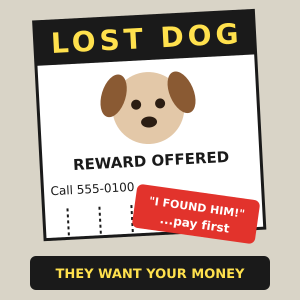 The poster you put up is the scammer's shopping list.
Scammers Look for Owners, Not Pets
AARP reports that scammers find targets through lost-pet posts on Facebook, Nextdoor and community forums, using the details owners share. As one expert put it: "Scammers aren't finding pets; they're looking for owners." They impersonate shelter staff, animal control, veterinarians or rescue workers to seek money, personal information, account access or verification codes. The BBB adds that in some cases the pet really was stolen, and the thief demands a ransom or tries to sell the animal online.
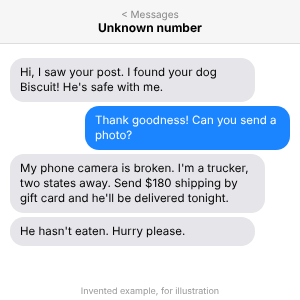 Invented example, for illustration: no photo, a story and a fee by gift card.
The "Found Your Pet" Call or Text
The Georgia Attorney General's office describes three versions. In the reward pickup scam, a caller arranges a meeting in public, says the pet is in their car and asks for the reward first, then vanishes. In the phantom return, the caller says they have your dog but they do not. In the "long distance trucker" version, the caller says they found your dog on a drive and took it to another state, and offers to ship it home if you send money. The BBB notes that these scammers avoid sending a photo, make excuses such as a broken phone, and press for money or a gift card.
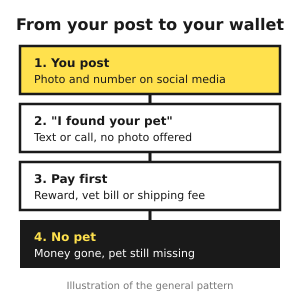 The usual path from a post to a payment.
Fake Vet Bills and Fake Search Services
AARP describes callers who say your pet was injured and needs emergency surgery. In a Florida case, the scammers asked for $2,746 and sent an AI-generated photo of a dog on an operating table. Others impersonate pet detectives or drone-based search companies, take payment and disappear; the BBB flagged the drone version in a May 2025 update. Warning signs include payment by Venmo, Cash App, cryptocurrency, gift cards or wire transfer, pressure to pay before any vet visit, a move to private chat apps, and threats such as euthanasia unless you pay right away.
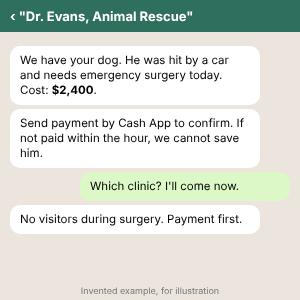 Invented example, for illustration: surgery cost, app payment and no visitors.
Before You Post and After the Call
Georgia officials suggest leaving the pet's name out of the ad and off its tag, giving only a partial description and asking callers to describe the pet, and listing a street or area rather than a home address. AARP adds keeping your phone number and email off public posts, sharing fewer images, and holding back distinctive markings to verify a real finder. Ask for a live video call or a meeting at a neutral place such as a shelter or police station. Contact shelters, vet clinics and animal control directly, since most lost pets are found within a mile of home.
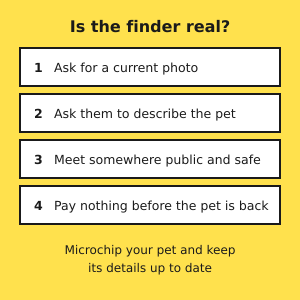 Four checks before you trust a finder.
- Do not send any money until you have seen your pet in person.
- Report it to local law enforcement and to the FBI at ic3.gov.
- Report it to BBB Scam Tracker. If you think the pet was stolen or is being sold online, contact the police.
- Microchip your pet, keep an ID tag on its collar and consider a GPS tracker for the future.