Puppy Scams: Why a Too-Cute Online Listing May Come With No Puppy
 The photo is real. The puppy usually is not for sale.
A Listing Built to Melt Your Heart
Scammers post ads, often on websites and listservs, offering puppy litters or other pets for a fee. The FTC notes they aim for the holidays, when children are asking for a pet. The Better Business Bureau adds that scammers pay for sponsored links to push fake listings up in search results, and reuse stolen photos to promise the same animal to several buyers. Popular breeds, such as Yorkshire terriers and French bulldogs, are common bait.
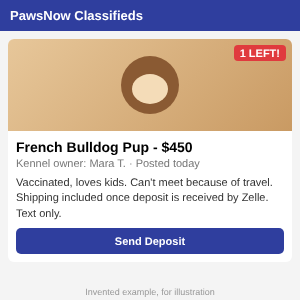 Invented example, for illustration: urgency, no meeting, and a deposit.
Why the Seller Never Lets You Meet the Pet
Legitimate sellers want you to see the animal in person or on video. In the BBB's study, sellers refused to let buyers meet the animal before paying, or claimed that pickup was impossible because of the pandemic. Fake shipping websites and bogus tracking pages then make the sale look real. The FTC's advice is blunt: if the seller refuses to meet, video chat or even talk by phone, move on.
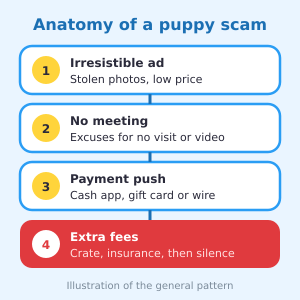 How a puppy scam usually unfolds.
Extra Fees That Keep Growing
Paying once rarely ends it. The BBB found that victims were asked for extra charges such as pet insurance, climate-controlled crates or a non-existent COVID-19 vaccine. In one case a buyer who had paid $600 in gift cards was pressed for another $750 and $850. Another sent $700 by Zelle and was then asked for money for a crate. Fraudulent forms may also collect card numbers, which are then used to fund more scams.
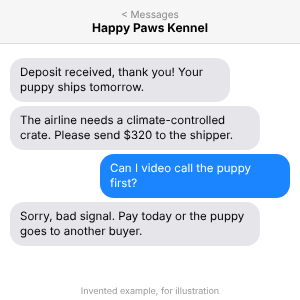 Invented example, for illustration: a crate fee and a refused video call.
What the Numbers Showed
The BBB logged nearly 4,000 pet scam reports in the United States and Canada in the first eleven months of 2020, with $2,843,552 lost and a median loss of $750. Reports had climbed from 884 in 2017 to 1,870 in 2019, and 12% of complaints involved cats or kittens. People aged 35 to 55 made up half of the 2020 reports. These figures date from 2020, but the tactics described still match what current warnings describe.
How to Buy a Pet Safely
The FTC suggests starting local: shelters and rescues charge modest adoption fees, and breed-specific rescues exist. Search the seller's name with words like "complaint" or "scam", and run a reverse image search on the photos, as stock or copied pictures are a warning. Never pay by gift card, wire transfer or cryptocurrency. Cash apps make money hard to recover, while a credit card offers the most protection.
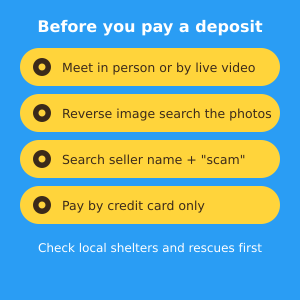 Four checks before any deposit.
- Stop sending money, even for "urgent" crate or insurance fees.
- If you gave card details, tell your card issuer and watch your statements.
- Report it to the FTC at ReportFraud.ftc.gov and to BBB Scam Tracker.
- Keep the ad, messages and payment receipts as evidence.