Obituary and Funeral Scams: How Scammers Target Grieving Families
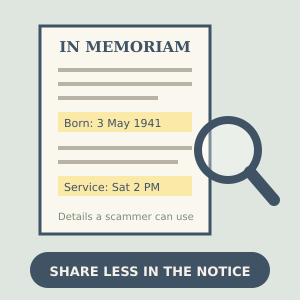 The details in a public notice are also a script for scammers.
Scammers Read the Notices Too
AARP explains that scammers read death notices in newspapers, online and on funeral home websites, then contact the families named in recent obituaries. They know the family is grieving, busy and handling many arrangements at once, which makes a plausible phone call easy to believe. The tactics range from fake payment demands to identity theft, and the common thread is pressure at an emotional moment.
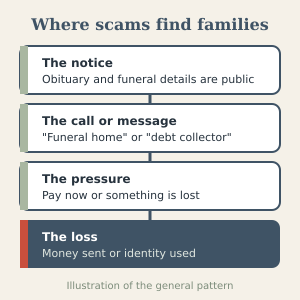 How a public notice becomes a target.
The Call From the "Funeral Home"
In the impostor version, the caller claims to work for the funeral home or cemetery and says a payment has bounced or more money is needed to keep the service on schedule. AARP also describes threat scams, where callers say a loved one's remains will be handed to the state unless a deposit is paid at once. NBC News reported cases in which relatives were told a deposit was needed to secure a cremation, with demands of $2,500 by Zelle or Apple Pay in one case and a $200 "insurance" deposit in another. Some callers spoof their number so it appears to come from the real funeral home.
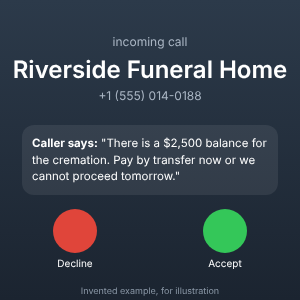 Invented example, for illustration: the name on the screen can be faked.
Debts, Identity Theft and Impostor "Friends"
The Consumer Financial Protection Bureau warns that scammers read obituaries and legal notices, then pose as debt collectors. Red flags include a caller who cannot or will not give details of the debt, or who presses for your Social Security number or account numbers. Generally, you are not required to pay a relative's debt after they die, unless it is a shared debt or state law requires it. AARP adds "ghosting", where criminals use obituary details to open accounts or file fake tax returns in the deceased's name, and romance-style impostors who pose as long-lost relatives to reach an inheritance.
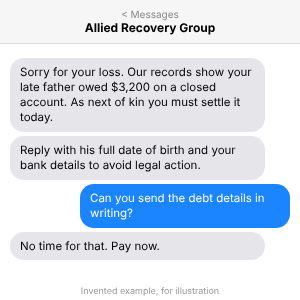 Invented example, for illustration: a debt claim with no details and no time.
Protecting the Family and the Name
Hang up and call the funeral home on a number you already know. Honest businesses allow you time, and no one legitimate needs payment by wire, cryptocurrency or gift card. When writing an obituary, AARP suggests leaving out birth dates and places, middle or maiden names, home addresses, and the time and place of the service. For a real debt claim, ask for the details in writing; legitimate collectors usually have to provide them in the first conversation or within five days, and you can dispute a claim in writing within 30 days.
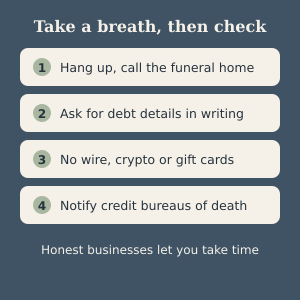 Four checks to make before paying anyone.
- Report the death to Social Security and send a death certificate to the IRS.
- Tell banks and financial institutions, and ask for accounts to be marked as belonging to a deceased holder.
- Notify Equifax, Experian and TransUnion so a death notice goes on the credit file.
- Check the deceased's credit report soon after the death and again a few months later.