Fake Ticket Scams: How to Avoid Counterfeit Concert and Event Tickets
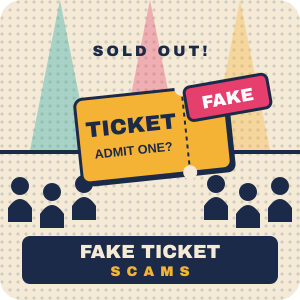 When a show sells out, fake tickets start to circulate.
The Sold-Out Show Everyone Wants
Few things feel as urgent as a ticket to a show that has just sold out. Fans refresh pages, join queues and scroll through social media hoping that someone has a spare pair. Scammers know this perfectly well. When demand is high, buyers become eager and less sceptical, and a stranger who says "I can get you in" sounds like a rescue rather than a risk.
AARP describes how the move to digital tickets, which are bought online, stored in a phone app and scanned at the gate, has made things easier for criminals. A convincing fake can be made with basic design software, and the buyer often has no way of checking it until they reach the entrance.
A Barcode Anyone Can Copy
A ticket on a phone screen is just a picture of a code. The Better Business Bureau in northeast Florida warns that scammers either create fake barcodes or reuse a photo of one that has already been sold, so the same "ticket" may be sold to several people. Only the first person to be scanned gets in, and everyone else is turned away at the gate.
The same trick can happen to genuine ticket holders. Consumer officials in Georgia advise people not to post photos of their own tickets online, because a barcode can be copied and used to make a fake.
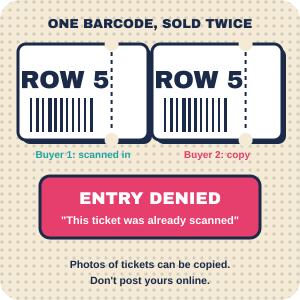 The same barcode can be sold to several buyers, but only one gets in.
Where the Fake Sellers Hide
The usual hunting grounds are social media, classified sites such as Craigslist and Facebook Marketplace, and lookalike websites. Georgia's consumer protection office also warns about street scalpers outside venues, who often sell counterfeit tickets at the gate. The seller's profile may be new, with few followers, and the story always explains why you cannot use a normal ticketing app, such as "the transfer is broken, I will send you a screenshot".
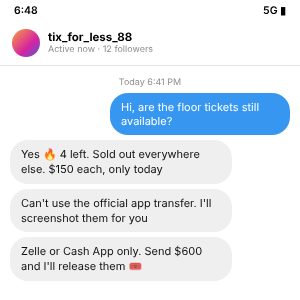 An invented example: a new account, a rush and "payment app only".
Prices and Pressure That Don't Add Up
A price far below the going rate is a classic lure, but so is one that is far above it. The BBB lists high-pressure tactics, such as threats that the deal will be cancelled if you do not pay at once, among the clearest warnings, along with demands for gift cards, cryptocurrency or wire transfers. Nobody selling genuine seats needs to rush you.
Check the Seat and the Address Before You Pay
Two quick checks catch many fakes. First, compare the seat to the venue's floor chart, because some scammers offer sections or rows that do not exist. Second, look closely at the web address. Lookalike sites copy a real venue and may change a single letter or add an extra word, and the BBB says that AI tools can now make such pages look authentic.
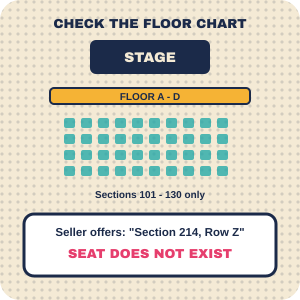 If the section isn't on the chart, the ticket isn't real.
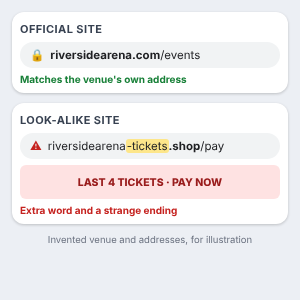 Invented addresses for illustration. Compare the real one letter by letter.
Why Careful Buyers Still Get Caught
It is tempting to think that only careless people lose money to ticket fraud, but the setting works against everyone. Buyers are often racing a clock, comparing dozens of listings and talking to sellers through direct messages, where there is no review history to read. A seller who answers quickly, sends a photo of a realistic ticket and seems friendly can feel more trustworthy than a faceless website, even though the photo proves nothing.
Scammers also play on the fear of missing out. A line such as "I have another buyer waiting" turns a calm purchase into a race, and the habits that would normally protect you, such as checking the seller's history or searching for the venue's official resale page, are the first things to be dropped.
Pay in a Way You Can Dispute
How you pay matters as much as who you pay. AARP advises avoiding Zelle, Venmo, PayPal, Cash App and wire transfers unless you personally know the seller, because those services lack the protections of a credit card. It cites a concertgoer in Detroit who paid $1,200 for four tickets through a payment app, after being shown a realistic digital ticket, only for the seller to disappear.
The safest course is to buy from the venue or an official ticket seller and to pay by credit card. If you use the resale market, AARP suggests dealing only with members of the National Association of Ticket Brokers, which has a code of ethics and a guarantee of 200 per cent of the ticket price if a member fails to deliver.
Keep Your Own Tickets Safe
Once you have genuine tickets, protect them. Keep them inside the official ticketing app, avoid posting screenshots of the barcode in your stories or group chats, and be wary of anyone who offers to "verify" your ticket by asking for a photo of it or for your account login. If you cannot attend, use the venue's approved transfer or resale option, which cancels the old code and issues a new one.
If You Have Already Been Burned
Contact your card company or payment provider at once, then file a police report and tell your state attorney general. You can report the scam to the Federal Trade Commission at ReportFraud.ftc.gov or the FBI's Internet Crime Complaint Center at ic3.gov, and to the BBB Scam Tracker. The BBB believes ticket fraud is under-reported, so every report helps other fans.