Pig Butchering Scams: How a Friendly Chat Turns Into a Fake Crypto Investment
 A friendly chat that turns into a "can't-miss" investment.
A Strange Name for a Patient Crime
The name sounds crude, but it describes the method exactly. According to the FDIC's Office of Inspector General, the term comes from the practice of fattening a pig before slaughter: the victim is built up slowly, with attention, friendship and promises, and only later "harvested". It is a confidence and investment fraud in which criminals persuade people to send larger and larger sums, usually in cryptocurrency, to something that looks like a sound opportunity.
What makes it different from a typical online swindle is time. There is no single dramatic moment where a victim is tricked. Instead, the scheme unfolds over weeks or even months, and by the time money is requested the scammer has become a trusted voice in the victim's daily life.
It Begins With a Message That Seems Harmless
The US Secret Service explains that first contact usually arrives out of the blue, through a dating site, a text message, a social media direct message or a messaging app. It may look like a simple mistake, such as a greeting meant for someone else, or a friendly introduction from an attractive stranger. The FBI adds that the scammer may even pretend to be a long-lost contact.
Once you reply, the conversation is often moved to a chat app, which takes it away from the moderators and reporting tools of the platform where you first met. From there the messages become regular and warm, and the relationship, sometimes romantic, sometimes simply a friendship, starts to feel real.
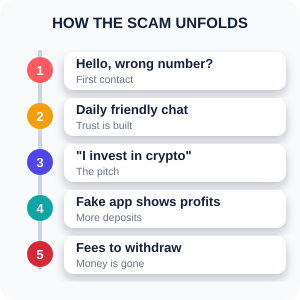 The usual path, from hello to heartbreak.
Weeks of Conversation Before a Single Request
Investigators stress that the trust-building stage is the foundation of everything. The scammer asks about your family, your work and your worries, and shares a carefully invented life in return. Good morning messages, shared photos and late-night chats make you feel noticed.
Notice what is missing: this person never seems to meet in person, and video calls are avoided or delayed. The Secret Service lists exactly that as a red flag, along with a new "friend" who offers financial or cryptocurrency advice that nobody asked for. Real friends do not usually teach you how to move your savings to a trading account.
The Moment the Conversation Turns to Money
At some point the scammer mentions a lucky win, a successful trade or a relative with inside knowledge. They might offer to show you how it works and suggest that you try with a small amount. The FBI describes fraudsters who present themselves as successful crypto traders and coach victims through their first deposits.
You are encouraged to open an account on a trading website or to download an app, and then to send money, often by wire transfer, through a legitimate crypto exchange or by other methods that are hard to undo. That is the quiet turning point, because the platform you are using belongs to the scammer.
A Dashboard That Only Shows What They Want You to See
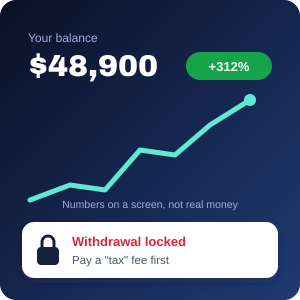 The balance is only a number on a screen.
Shortly after you invest, the website shows your balance growing at an astonishing rate. The FBI warns that these fraudulent sites and apps display rapid gains precisely to encourage further deposits. The numbers are not connected to any real market, and the profits exist only on the screen.
Each apparent success makes the next deposit feel safer. The scammer may praise your instincts, hint that the opportunity will not last, or suggest that the relationship itself depends on you joining them in a bigger investment. The Secret Service notes that the pressure to invest more often comes with the implication that the relationship will end if you do not.
When Cashing Out Costs More Than Staying In
The trap closes when you try to withdraw. Instead of paying out, the platform demands taxes, fees or identity documents, and each demand is presented as the last step before you can access your money. The FBI is clear that the funds are never returned, no matter how much you pay. Eventually the website disappears or you are locked out, and the friendly voice stops answering.
Losses can be severe, ranging from tens of thousands of dollars to millions according to the FBI, and the emotional damage of losing a trusted companion at the same time can be just as hard to bear.
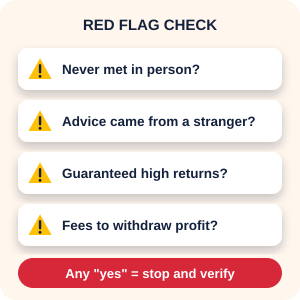 Four questions worth asking before you move any money.
Four Questions to Ask Before You Send a Dollar
Ask yourself whether you have ever met this person face to face, because someone who always avoids it is hiding something. Ask whether the investment advice came from a stranger you found online, since no legitimate adviser begins with a flirtatious message. Consider whether you have been promised high returns with little risk, and whether you have been asked to pay a fee before you can withdraw. A single "yes" is enough reason to stop.
You can also verify any firm or broker yourself, using official regulator tools such as FINRA BrokerCheck in the United States, and check carefully the spelling of any exchange's web address, because lookalike domains are common. Searching the platform's name with the word "scam" is a quick and free test.
If You Have Already Lost Money
Stop sending money immediately, including any "fees" to release your funds, and keep every message, wallet address and receipt. Tell your bank as soon as possible, file a police report and submit a complaint to the FBI's Internet Crime Complaint Center at ic3.gov, including how the person first contacted you, the names and usernames they used, and the dates, amounts and wallet addresses involved. The Secret Service also invites crypto fraud victims to email CryptoFraud@SecretService.gov.