Fake Photo and Photoshop Scam
One of the biggest advantages scammers have online is anonymity. Most victims never meet the person they are talking to face-to-face. Instead, relationships are built through messages, emails, social media profiles, and photographs.
Because of this, photos become one of the most powerful tools scammers use to gain trust. Unfortunately, many online scammers rely on stolen, edited, or manipulated images to create convincing fake identities.
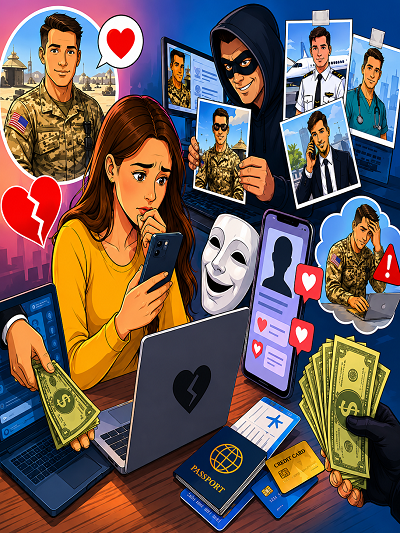
Why Romance Scammers Use Stolen Photos and Fake Profile Pictures
Photos create credibility. A scammer knows that a professional-looking photograph can instantly make their story appear more believable. Attractive photos help them gain attention, build trust, and create emotional connections with potential victims.
Rather than using their real pictures, scammers often steal photographs from:
- Military personnel
- Doctors and healthcare workers
- Pilots
- Engineers
- Models
- Business professionals
- Social media influencers
How Scammers Use Photoshop to Create Fake Identities
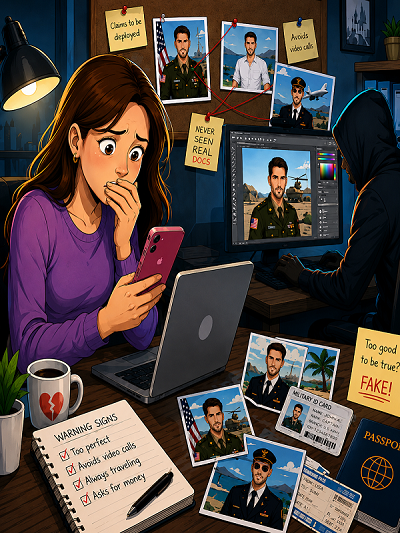
Some scammers go beyond simply stealing photos. Using image-editing software, they manipulate photographs to support their fake stories and create more convincing online identities.
- Add military uniforms
- Create fake identification cards
- Generate fake passports
- Alter travel documents
- Add company logos
- Create luxury lifestyle backgrounds
The goal is simple: make victims believe the scammer's fabricated identity. At first glance, these images may appear authentic. However, closer inspection often reveals editing mistakes, inconsistent lighting, distorted backgrounds, or unrealistic details.
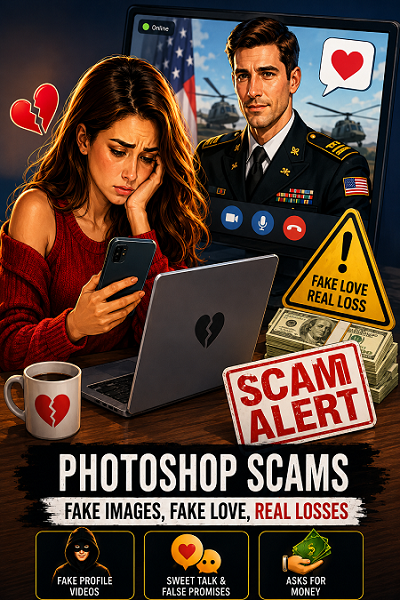
Common Fake Identities Used by Scammers
Romance scammers frequently claim to be:
- Military officers deployed overseas
- Oil rig engineers
- Commercial airline pilots
- Doctors working abroad
- International business executives
- Humanitarian aid workers
- Widowed professionals seeking love
The Webcam Myth in Online Dating Scams
Many victims assume a video call automatically proves someone is real. Unfortunately, scammers have adapted to this expectation using various deceptive techniques.
- Pre-recorded videos
- Stolen webcam footage
- Fake video backgrounds
- Deepfake technology
- Edited clips from social media
Warning Signs of a Fake Photo Scam
Be cautious if someone:
- Has unusually professional photographs
- Refuses live video calls
- Claims to be constantly traveling
- Falls in love very quickly
- Avoids personal questions
- Provides inconsistent information
- Has limited social media history
- Requests money after gaining trust
Using Reverse Image Search to Identify Scammer Photos
One of the easiest ways to investigate a suspicious profile is by performing a reverse image search. This can reveal whether the same image is being used elsewhere online under different names.
Many scam profiles are exposed when victims discover that the photos belong to completely different people living in another country.
The Money Request Always Comes
Most romance scams eventually follow the same pattern. After building trust through fake photos and emotional conversations, the scammer introduces a problem that supposedly requires financial assistance.
- Emergency medical bills
- Travel expenses
- Visa processing fees
- Customs charges
- Family emergencies
- Business investments
How to Protect Yourself from Fake Photo Scams
- Verify their identity
- Perform reverse image searches
- Research their claims
- Request live video calls
- Check scam databases
- Talk with trusted friends or family members
- Never send money to someone you have not met in person
Final Thoughts
Scammers understand that emotions often override logic. By using stolen photos, fake identities, and carefully crafted stories, they create convincing illusions designed to gain trust.
Remember: photographs can be stolen, edited, and manipulated, but facts can always be verified.