Worldwide Background Check – HuntScammers
Use HuntScammers as part of your global safety check. Before trusting someone abroad, especially with money or personal data, combine basic research with our tools for hunting scammers, including repeat male scammers and female scammers operating in different countries.
How to Do a Basic Background Check Around the World
Romance scams, fake jobs, investment fraud and online lies can come from any country. Even if you don’t know the local language or laws, you can still take smart, legal steps to check someone’s background and reduce the risk of being scammed by male scammers or female scammers.
This guide shows how to use public information and common sense to run a worldwide background check before you trust – with help from HuntScammers and other reliable sources.
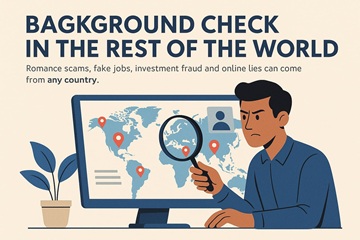
One World, Many Laws
Every country has different privacy and public-record rules. A global background check focuses on what you can see legally, not on hacking or spying.
Signals, Not Perfection
You may not find everything, but even small pieces of information can expose patterns used by hunting scammers across borders.
Protect, Don’t Attack
The goal is to protect yourself and others – not to threaten, harass or dox suspected scammers. Keep every step legal and ethical.
What a Worldwide Background Check Really Is
A background check in another country does not mean hacking or spying. It means using public, legal information and your own critical thinking to decide whether someone seems trustworthy. Every country has different rules and databases, so you may not find everything – but even small checks can reveal big red flags.
- Respect local privacy and data-protection laws at all times.
- Do not try to buy stolen data or use illegal “lookup” services.
- Use information only to protect yourself, not to harass or attack others.
Verify Their Basic Story
No matter which country they claim to be from, start by checking if their basic story is consistent with what you can see online.
- Search their full name with their claimed city and country.
-
Review their social media profiles (Facebook, Instagram, LinkedIn,
TikTok, etc.) and ask:
- Do photos look real and consistent over time?
- Do they have real friends, comments and activity?
- Or is everything new, empty or obviously fake?
- Be careful if they refuse to show any public profile but still ask for money or private information.
Check Their Contact Details
Phone numbers, emails and usernames are often reused in many scams and can show a long, hidden history across countries.
- Search their phone number and email address in search engines.
- Look up their username or handle on different platforms to find old profiles or different identities.
- Use HuntScammers and other scam-report websites to see if anyone has reported those details before.
Check Company or Website Claims
If they say they own a company, work for an international firm, or run an investment or crypto website, treat this as a key part of your worldwide background check.
- Search the company name plus words like “review”, “complaints”, “scam” and local-language equivalents.
- Check if the company appears in official business registries in that country (many have public search portals).
- Use domain tools (WHOIS) to see how long the website has existed and where it is registered.
- Be very careful with brand new sites promising huge returns, crypto profits or miracle investments.
Watch Their Behaviour, Not Just Data
Scammers around the world use very similar scripts, even if the language and country change. Patterns matter as much as databases.
- They move fast – declaring love quickly or pushing “urgent opportunities”.
- They avoid video calls, or show poor-quality video that doesn’t match their photos.
- They ask for money, gift cards, crypto or bank transfers for emergencies, visas or investments.
- They become angry, guilty or distant when you ask normal questions or try to verify details.
If their words and actions make you feel rushed, guilty or confused, step back and investigate more before you risk your money or safety.
Use Local & International Sources
Depending on the country, you may be able to learn more using a mix of local and global resources.
- Search local news websites and blogs using their name with local-language keywords.
- Check public court, company or professional-license registers where they exist.
- Look at consumer-protection or financial-regulator websites that publish scam warnings.
Some countries share very little online. A lack of information does not prove someone is honest – but a lot of negative information is a very strong warning sign.
Respect Legal & Ethical Limits
Even when dealing with cross-border scammers, it is important not to cross certain lines yourself. Staying on the right side of the law protects you and your case.
- Do not try to access government or private databases without permission.
- Do not hire “hackers” or use illegal tracking tools or spyware.
- Do not publish someone’s full address, children or unrelated family information.
- Do not threaten or blackmail anyone, even if you believe they scammed you.
What to Do If You Suspect an International Scammer
If your checks suggest that the person or company is not trustworthy, treat the situation as a serious warning and focus on limiting the damage.
- Stop sending money or information immediately.
- Block them on all platforms – dating apps, messaging apps, email and social media.
- Contact your bank, card provider or payment service if you already paid.
- Save all chats, emails, receipts and screenshots as evidence.
- Consider placing a report on HuntScammers so people in other countries can see warnings about the same phone, email, website or company – helping to stop male scammers and female scammers from repeating the same tricks.